As many people now know, very little of the coffee plant goes to waste: we use the seeds, the leaves and the fruit.
In fact the fruit is sometimes put to several different uses. In 99% of cases it will become fertiliser; in 1% of cases it takes another road. Let’s look at it.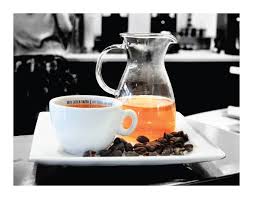
The fruit is divided into three main parts — pericarp, mesocarp and endocarp (in detail: skin, pulp, parchment, silverskin and seed). As we always say on our training courses, the coffee cherry can be compared to the cherries we know at home, with one big difference: in the coffee drupe we keep the seed and “throw away” the pulp, the opposite of the cherries on our tables.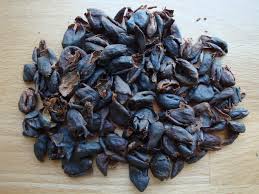
In reality the pulp is not exactly thrown away but piled up — which is usually what creates the characteristic smell at mills and collection centres — and left to ferment. Once the harvest is over it becomes organic fertiliser for the plants.
That is entirely true except for a small percentage of the harvest, usually in El Salvador, Bolivia and very rarely elsewhere, where the skins, with a little pulp still attached, are properly dried and sold.
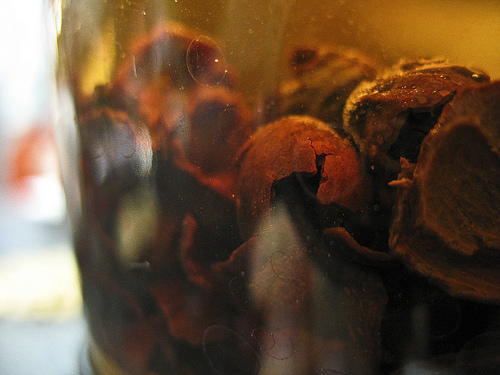 More than a thousand years ago, in “Arabia Felix”, cascara was regularly used during religious ceremonies under the name Qishr: an infusion of fermented coffee skins.
These skins are called “cascara”, and brewed as an infusion they taste pleasantly sweet, of plum and red cherry.
How do you prepare a cascara infusion? Usually with 5 g of skins per 250 ml of hot water at 90°C, left to steep like a tea for around 5 minutes. Obviously the recipe varies according to the type of cascara, the intensity you want to reach and so on — and as with the far better known tea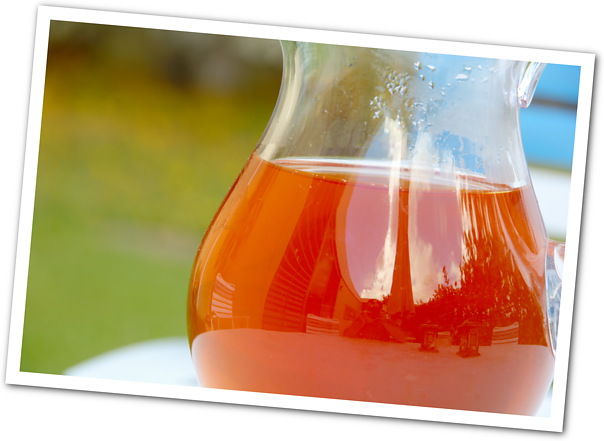 , countless variables come into play that change it and make it more or less tasty.
One curiosity: like the whole coffee plant, the skins and the pulp also contain caffeine, so a cascara infusion will give you a stimulating, energising drink too — but at least four times lower than ordinary coffee, around 100 mg/l.
Try it cold in summer: it is delicious!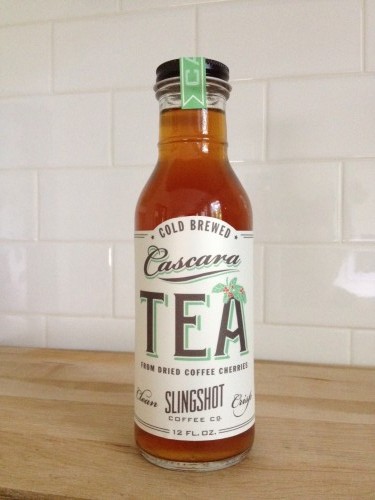
Below is the link to the Square Mile blog:
http://www.squaremileblog.com/2008/11/05/videocast-1-cascara/
By Davide Cobelli